A catalogue of tri-trophic associations of Aphidophagous species of the ladybird beetle Oenopia Mulsant, 1850 (Coccinellinae: Coccinellidae: Coleoptera) in different states and union territories of India
Article Sidebar
Main Article Content
Abstract
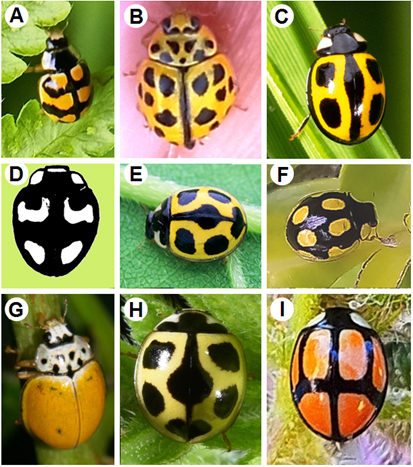
The present study addresses the tri-trophic relationships involving nine species of Oenopia Mulsant (Coccinellidae: Coleoptera): Oenopia billieti (Mulsant), Oenopia conglobata (Linnaeus), Oenopia kirbyi Mulsant, Oenopia manipurensis Shantibala, Oenopia mimica Weise, Oenopia quadripunctata Kapur, Oenopia sauzeti Mulsant, Oenopia sexareata (Mulsant), and Oenopia signatella (Mulsant), identified as aphidophagous in India. The most polyphagous species, Oenopia sauzeti Mulsant, feeds on 44 aphid species, while Oenopia kirbyi Mulsant and Oenopia sexareata (Mulsant) feed on 41 and 30 aphid species, respectively. All these species have been recorded as predators of 72 aphid species that infest 109 plant species across 13 states and union territories in India. Most tri-trophic associations (triplets) of Oenopia species are documented in Manipur (105 triplets), followed by Uttarakhand (66 triplets), West Bengal (36 triplets), Himachal Pradesh (39 triplets), Nagaland (21 triplets), and several other states with 1-18 triplets. The result reveals that the mealy plum aphid, Hyalopterus pruni (Geoffroy), was preyed upon by the most Oenopia species (7 species), followed by Aphis craccivora Koch, Aphis fabae Scopoli, Aphis gossypii Glover, and Macrosiphum rosae (6 species each). In contrast, Aphis aurantii Boyer de Fonsc. and Myzus persicae (Sulzer) were attacked by 5 species each, while other aphid species faced predation from 1 to 4 predator species. The Oenopia are mainly associated with aphids that attack Artemisia vulgaris L. (17 triplets), followed by Quercus serrata Murray and Malus domestica (Suckow) Borkh. (13 triplets each); Prunus persica (L.) Stokes (9 triplets), Alnus nepalensis D. Don and Solanum melongena L. (8 triplets each); Brassica oleracea L. var. botrytis (7 triplets); and on various other plants with 1-5 triplets. The findings indicate that tri-trophic interactions involving these aphidophagous predators remain largely unexplored across several regions of India. Hence, systematic surveys are required to document these ladybird predators in the understudied states and union territories. Such a checklist would provide a valuable reference for taxonomists, researchers, academicians, conservationists, and policymakers, facilitating the effective use of these natural enemies in aphid management through biological control strategies.